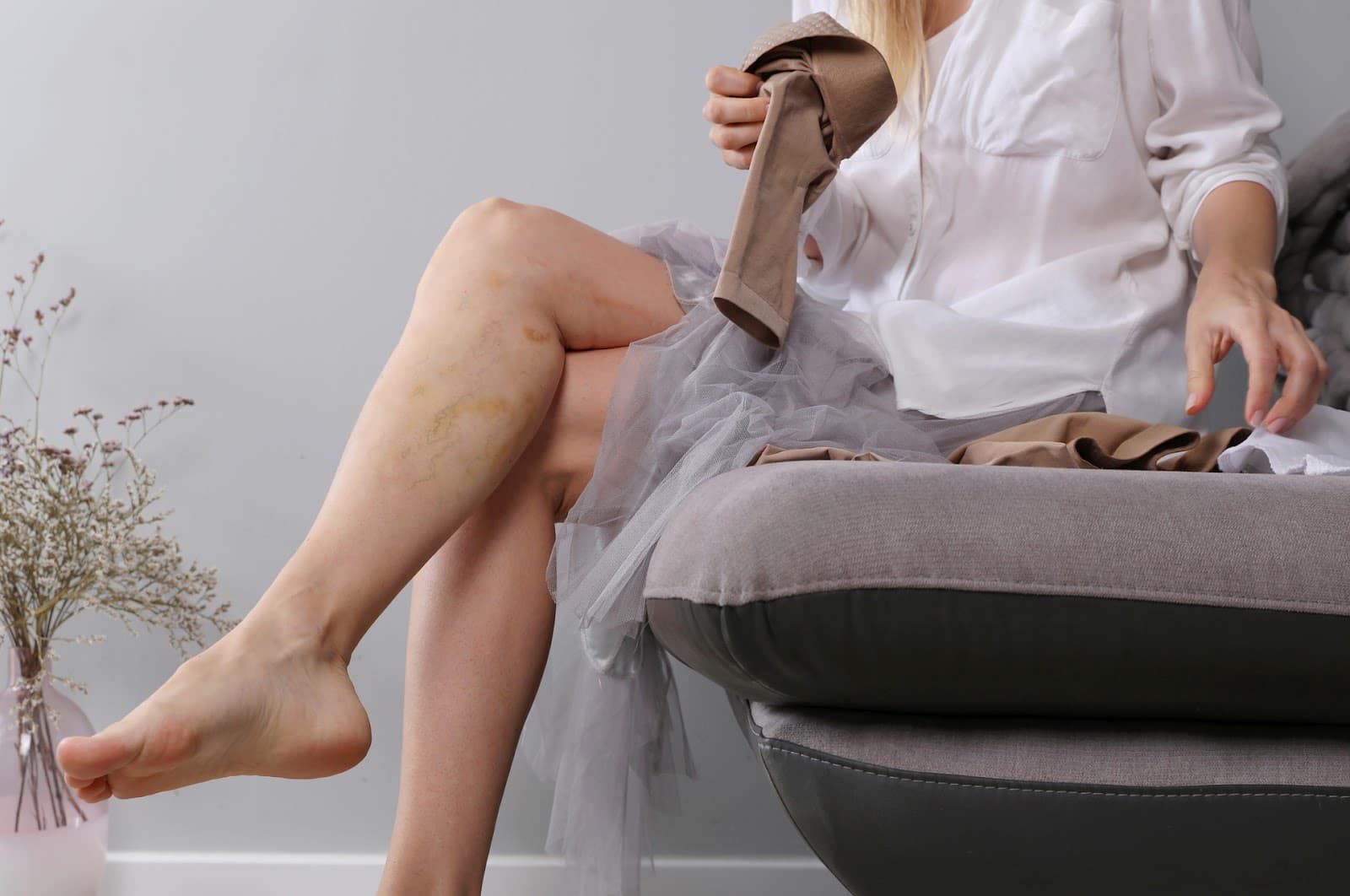
Pain on the inside of the knee joint, often called medial or inner knee pain, is a common problem that can affect people of all ages. It may develop suddenly after an injury or come on gradually over time due to wear and tear. Depending on the cause, the pain may be accompanied by swelling, stiffness, weakness, or difficulty walking.
Several conditions can cause pain along the inner side of the knee, including ligament and muscular injuries, cartilage damage, arthritis, and inflammation around the joint. In some cases, pain or discomfort around the knee may also be related to vein problems, such as varicose veins, particularly if symptoms are accompanied by aching, heaviness or visible veins in the leg. Understanding the underlying cause is the first step towards finding the most effective treatment.
What is pain on the inside of the knee joint?
This type of pain is felt along the inner edge of the knee, closest to the opposite leg. The area contains several important structures that help support movement and stability, including cartilage, ligaments, tendons, and bursae (small fluid-filled sacs that reduce friction around the joint).
Inner knee pain can range from a mild ache to severe discomfort that makes walking, climbing stairs, or exercising difficult. Some people notice pain only during activity, while others experience symptoms even when resting.
Common symptoms you shouldn’t ignore
The symptoms can vary depending on the cause. Common signs include:
Pain along the inner side of the knee: Often worse when walking, climbing stairs,squatting, or exercising.
Swelling around the joint: The knee may appear larger or feel tight due to fluid build-up.
Stiffness: Particularly after resting, sitting for long periods, or first thing in the morning. Stiffness that lasts longer than 30–60 minutes or continues to worsen should be assessed by a healthcare professional.
Tenderness to touch: the inside of the knee may feel sore when pressure is applied.
Difficulty bending or straightening the knee: some conditions can restrict the knee's normal range of movement.
A feeling that the knee may give way: instability or weakness can make the joint feel less secure.
Clicking, popping, or grinding sensations: these noises may occur when moving the knee and can sometimes be associated with cartilage or joint problems.
Pain when climbing stairs: stair use places extra pressure on the knee joint.
Discomfort after physical activity: symptoms may become worse following exercise,sports, or prolonged periods of standing.
Reduced mobility: pain and stiffness can make everyday activities such as walking, kneeling, or getting up from a chair more challenging.
Redness : the area may become red,or hot to touch
Common causes
Inner knee pain can occur suddenly after an injury or develop gradually over time. The exact cause often varies depending on many factors including your age, activity level, and other symptoms.
Osteoarthritis: wear and tear of the cartilage within the knee joint can cause pain, stiffness, swelling, and reduced mobility. It is more common in older adults.
Medial meniscus tear: the meniscus is a piece of cartilage that cushions the knee. A tear may occur after a twisting injury or develop gradually with age, causing pain, swelling, and sometimes locking of the knee.
Medial collateral ligament (MCL) injury: This ligament supports the inner side of the knee. Sports injuries or sudden changes in direction can stretch or tear it, leading to pain, tenderness, and instability.
Bursitis: Inflammation of a small bursa on the inside of the knee can cause pain and tenderness, particularly when climbing stairs or exercising.
Overuse injuries: repetitive activities such as running, cycling, or frequent kneeling can place ongoing strain on the knee structures and lead to irritation over time.
Tendon injuries: inflammation or irritation of the tendons around the knee may cause pain during movement and physical activity.
Rheumatoid arthritis: this autoimmune condition causes inflammation in the joints and can lead to pain, swelling, stiffness (often lasting for extended periods), and warmth around the knee.
Knee bursitis: inflammation of one of the fluid-filled bursae around the knee can result in pain, swelling, and tenderness that worsens with movement.
Previous knee injuries: old injuries can increase the risk of ongoing knee pain, especially if they have affected the cartilage, ligaments, or alignment of the joint.
Patellofemoral pain syndrome (PFPS): pain occurs around or behind the kneecap, often linked to muscle imbalance, overuse, or poor movement of the patella during movement. It is common in active people and can worsen with stairs, squatting, or prolonged sitting.
ACL injury: a sprain or tear of the anterior cruciate ligament, often caused by sudden stops, twisting, or impact during sport. It can cause immediate pain, swelling, and a feeling of instability in the knee.
How is pain on the inside of the knee joint diagnosed?
A healthcare professional will usually ask about your symptoms, how long you have had them, and whether the pain started after an injury or developed gradually. They will also relate it to any other medical issues you have. They may examine the knee for:
Swelling or inflammation
Tenderness along the inside of the knee
Reduced movement or stiffness
Signs of instability or weakness
Pain during certain movements
In some cases, further tests may be needed to identify the cause of the pain. These can include:
X-rays: to check for arthritis or changes in the bones of the knee joint.
Ultrasound scans: to assess tendons, bursae, and other soft tissues around the knee.
MRI scans: to look for damage to cartilage, ligaments,or other structures inside the knee.
Blood tests: if an inflammatory condition such as rheumatoid arthritis is suspected.
A diagnosis helps identify the underlying cause of the pain and guides the most appropriate treatment.
Treatment for pain on the inside of the knee joint
Treatment depends on the underlying cause and the severity of symptoms. Many cases improve with simple self-care, while others may require physiotherapy or medical treatment.
Self-care treatments
These are often the first step in managing inner knee pain and can help reduce discomfort and swelling:
Rest: avoiding activities that worsen pain, such as running or twisting movements
Ice: applying a cold pack for short periods to reduce pain and swelling
Activity changes: gradually returning to normal movement as symptoms improve, rather than stopping all activity completely
Non-surgical treatments
If symptoms continue, further treatment may be needed to improve strength,stability, and pain levels:
Physiotherapy: targeted exercises to strengthen muscles around the knee and improve joint support
Pain relief medication: over-the-counter options may help reduce pain and inflammation
Weight management: reducing pressure on the knee joint can help ease symptoms over time
Knee supports or braces: may improve stability during walking or exercise
Injections: sometimes used to reduce inflammation and provide temporary pain relief
Surgical treatments
Surgery is usually only considered when symptoms are severe or when other treatments have not worked. The type of procedure depends on the cause of the pain:
Arthroscopy (keyhole surgery): used to repair or remove damaged cartilage, such as a meniscus tear
Ligament repair or reconstruction: used for significant medial collateral ligament (MCL) injuries
Partial or total knee replacement: considered in advanced osteoarthritis where joint damage is severe
Tendon repair surgery: used for serious tendon injuries that do not heal with conservative treatment
Can vein problems cause pain on the inside of the knee joint?
Most cases of inner knee pain are caused by problems affecting the knee joint itself. However, discomfort around the knee can sometimes be linked to an underlying vein condition, especially when aching, heaviness, or swelling affects the whole leg.
This type of pain is often described as a dull ache or heaviness rather than a sharp joint pain. It may become more noticeable after long periods of standing or sitting. Some people also notice swelling in the lower leg, visible varicose veins, or tired, heavy-feeling legs.
If knee discomfort persists alongside these symptoms, a vascular assessment may help determine whether a vein problem is contributing to the pain.
When should you seek medical advice?
You should seek medical advice if:
Pain persists for several weeks
The knee is swollen, hot, or red
You cannot fully move the joint
The knee gives way or locks
You cannot put weight on the leg
Symptoms are worsening despite self-care
Urgent medical assessment may be needed if severe pain develops suddenly or if there are signs of infection.
Pain on the inside of the knee joint is often related to injuries, arthritis, or inflammation affecting the structures within the knee. While many cases improve with self-care and physiotherapy, persistent symptoms should be assessed to identify the underlying cause.
If your knee discomfort is accompanied by aching legs,swelling, heaviness, or visible varicose veins, UK Vein Clinic can help. Our specialists can assess your symptoms and determine whether an underlying vein condition may be contributing to your discomfort.
FAQ: Inner Knee Pain
What causes pain on the inside of the knee?
Pain on the inside of the knee can happen for many reasons. Common causes include a strained ligament, a meniscus tear, arthritis, tendon problems, or overuse from sport and exercise. Sometimes the pain starts after an injury, while in other cases it develops gradually over time.
How do you treat inner knee pain?
Treatment depends on what is causing the pain. Many people find relief with rest, ice, gentle exercise, and avoiding activities that make symptoms worse. Physiotherapy can help improve strength and movement. If pain is severe, lasts for several weeks, or keeps coming back, it is important to seek medical advice.
How can you tell if inner knee pain is serious?
Inner knee pain may be more serious if you cannot put weight on the leg, the knee feels unstable, becomes locked, or swells suddenly after an injury. You should also seek medical advice if symptoms are severe, getting worse, or affecting your daily activities.
Is walking good for inner knee pain?
Gentle walking can help keep the knee moving and may reduce stiffness. However, if walking makes the pain worse, it is best to reduce activity and rest the joint. The right level of activity depends on the cause of the pain and how severe your symptoms are.
Why do I have inner knee pain when bending or straightening my knee?
Pain when bending or straightening the knee can be caused by a meniscus injury, a ligament strain, tendon irritation, or arthritis. You may notice discomfort during everyday movements such as climbing stairs, standing up, or squatting.
Can you have inner knee pain with no swelling?
Yes. Inner knee pain does not always cause swelling. Mild strains, tendon problems, early arthritis, and some meniscus injuries can cause pain without any visible swelling. If symptoms continue or worsen, it is worth getting them checked.
Explore cutting-edge leg vein treatments at UK Vein Clinic. From EVRF for varicose veins to Veinwave for spider veins, discover personalised treatments for optimal vascular health.
On Wednesday evening, we had the privilege of hosting our first “GP Vascular Masterclass” for over 50 GPs in person at the Hotel du Vin Wimbledon and virtually thanks to our partners at Radcliffe Vascular. It provided an invaluable platform for our fantastic doctors to exchange insights on vein treatments, navigating complexities, and getting to know the wonderful Wimbledon GPs.
Take our two-minute quiz
Take our two-minute diagnostic test to see if you could benefit from varicose vein treatment.
Try our comparison tool
Compare UK Vein Clinic with providers in your area
Compare now
Share Our Article
Share our article and help us to leave UK free of varicose veins
Download our free brochures
Discover our breakthrough minimally invasive treatments and hear directly from our expert vascular surgeons.
We're pleased to be able to provide our world-class varicose vein treatment in a variety of places throughout the United Kingdom. Learn more about your treatment options, including endovenous radio-frequency ablation (EVRF) and foam sclerotherapy, at the clinic closest to you.

 Call us on 0208 1873999Arrange a visit
.jpg)
.jpg)
.jpg)
.jpg)