
 Chiama lo +39 02 8294 1870Prenota la tua visita
-
Vene Varicose
- Informazioni
- Trattamenti
- Prezzi
- La nostra clinica
- Il nostro team
- Richiedi una brochure
- Perché sceglierci
- Contattaci
Blog
Published on
August 12, 2026
Your blood travels around the body through arteries and veins. These work as pipes; the arteries carry blood fresh with oxygen away from the heart, and veins return this used blood without oxygen back to the heart. At any one time, 60-80% of your blood is in your veins, travelling back to your heart. Veins have to work hard against gravity, pushing the blood from your toes up your legs, especially when you are sitting or standing. In order to do this, the veins in your legs have special one-way valves inside to prevent blood from going back towards your toes, in the wrong direction.
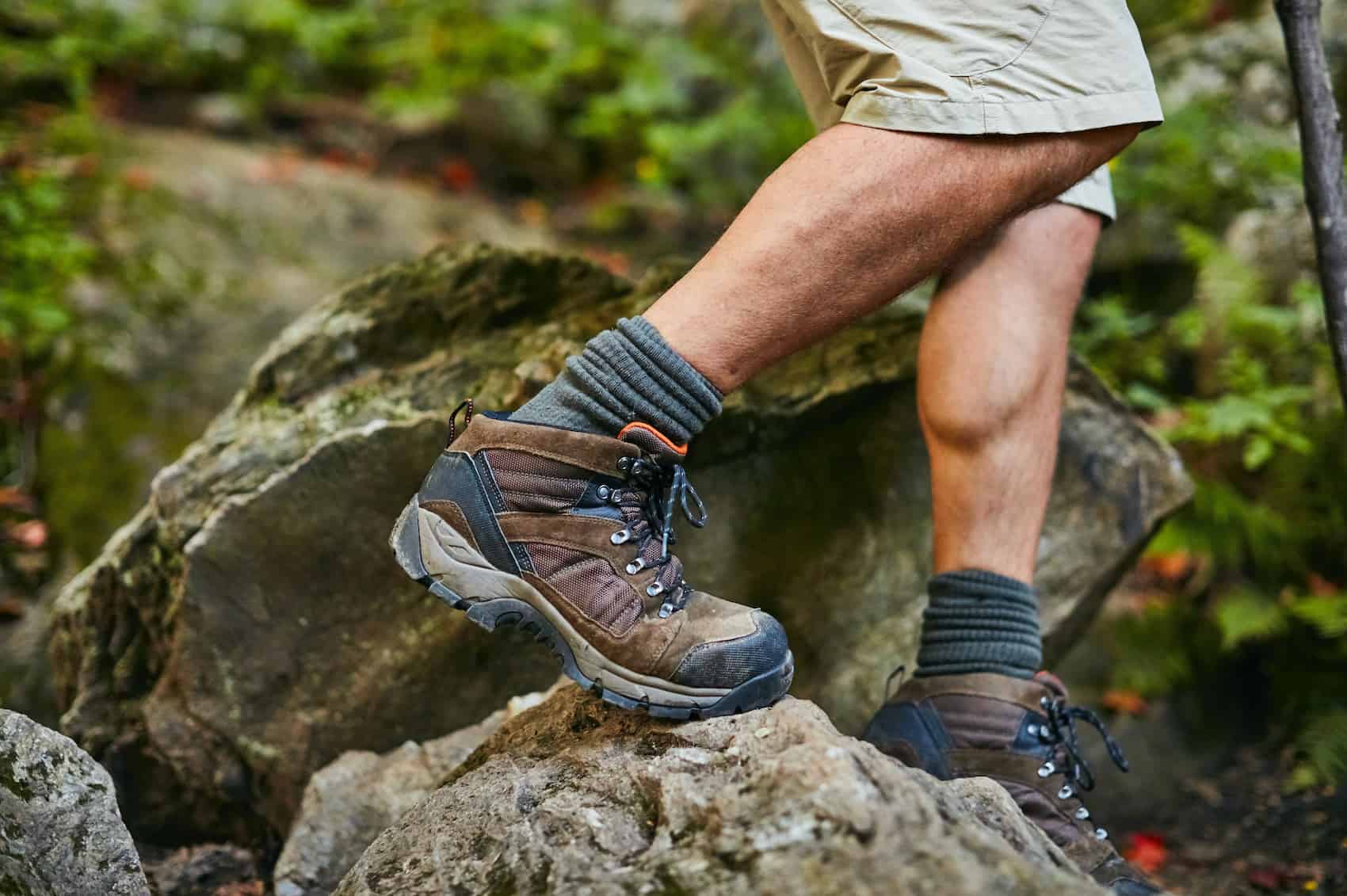
Veins work with your ‘second heart’- your calf muscle. When you walk, the calf muscles act as pumps, which squeeze the blood upwards along your leg. In short, your heart pumps blood to your toes, and your calf muscle pumps it back up to your heart.
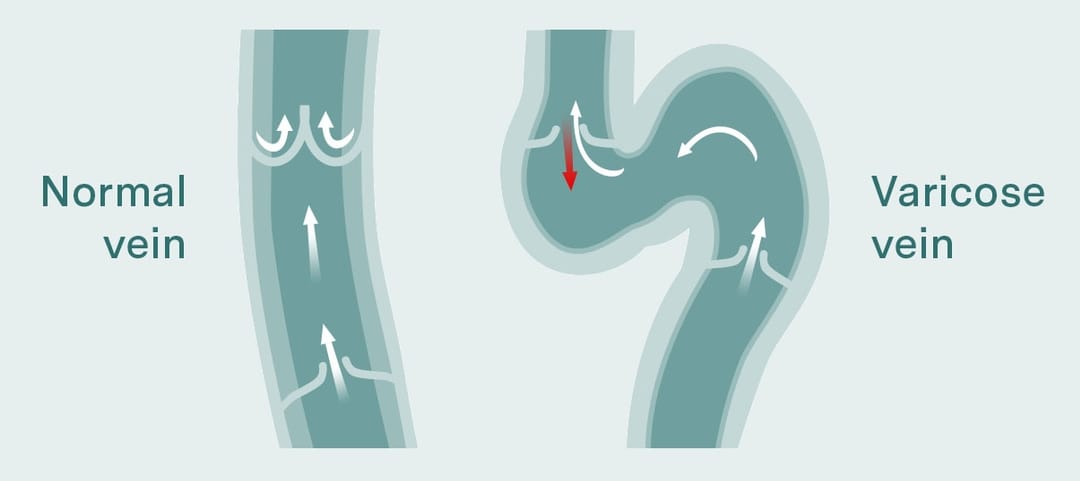
You have two main systems of veins in your legs, best conceptualised as different types of roads. Your saphenous veins are smaller and closer to the skin- they can be considered the A roads and B roads. Your deep veins are bigger and run through the middle of your legs- they can be considered the motorways. Sometimes, the system does not work adequately anymore. This typically occurs in your saphenous veins because the valves have stopped working as a one-way system. This can be caused by a variety of things-weakness over time, trauma to the valves due to blood clots, or a family history of weak valves.
When this happen, blood doesn’t travel up your legs efficiently, and it stagnates in the veins. This causes the veins to become inflamed and dilate, or get larger. Think of it as congestion and traffic on the A and B roads; the congestion of this deoxygenated blood can cause problems and pain in your legs. We call these varicose veins, and they can effect 40-50%of the population. Unfortunately, over 90% of patients who see their GP with varicose veins will not receive the recommended, evidence-based treatment through the NHS. Luckily, here at the UK Vein Clinic we offer a world-class treatment and lasting relief through radiofrequency ablation (RFA).
The pain from varicose veins usually feels like a heaviness, an aching or throbbing, even a burning sensation. People can also experience symptoms like pins and needles or severe itchiness. Elevating your legs or wearing compression stockings can help alleviate these symptoms, but you usually need to fix the root cause of the problem. The congested, stagnant blood in your veins is not healthy for your skin, causing it to itch and change colour. In some instances, wounds can appear around your ankles, that can take months or even years to heal.
Studies have shown that simple disease in the veins can impact quality of life just the same as severe disease. Patients with issues in their veins can experience the same bodily pain scores as patients with heart failure, or chronic obstructive pulmonary disease. Luckily, treatment for this can easily reverse the discomfort caused by varicose veins, which in turn positively impacts your quality of life.
To treat these congested veins, we have to take them out of action, and redirect the blood flow back to the deeper veins in your legs. This is similar to blocking off the smaller A roads with a detour sign, channelling the flow back to the larger motorway. The most common method uses heat generated from radiofrequency waves, via key-hole surgery. A small incision is made near your knee or calf to insert a heating device inside your vein. The heat seals the vein closed, so blood can no longer flow through. Before doing this, a cold fluid mixed with anaesthetic is injected into your leg to protect and numb the tissues surrounding the varicose vein. This radiofrequency ablation is typically done using only local anaesthetic; the procedure is quick, very effective, and has a short recovery time.
Varicose veins can also be treated with open surgery, called ‘stripping’, or ‘avulsions’. This is done by manually removing the varicose veins from your legs, and is sometimes necessary for more complex situations.You are typically put to sleep under general anaesthetic, as this procedure can be extremely painful. This procedure will also likely cause more bruising, more pain, and less mobility during recovery time.
Treating varicose veins with RFA and a local anaesthetic is usually the best options for patients, as you can return to daily life and a normal routine immediately. The procedure also has less pain and less risk than open surgery; while it may be uncomfortable at times, it is tolerable and surprisingly quick. The main discomfort happens when the tumescence is injected into your leg, as the fluid is entering a tight space, and it takes a few minutes for the numbing medication to fully take effect. Most patients describe this discomfort as a strong pressure, along with a sensation of warmth when the ablation starts. It lasts less than five minutes, and shouldn’t worry you, as you will be too distracted talking with us about any holiday plans, hobbies, or favourite family stories.
For the first two weeks after your procedure, your leg will feel pretty good, then may begin to ache and get sensitive along the treated vein. Some patients can also experience a small inflammatory reaction, where the skin gets red and irritated. Many patients feel the treated vein tightening and hardening along their leg, which can be an odd sensation and last up to a few months. We recommend taking pain-killers such as paracetamol and ibuprofen as required. Regular exercise that uses your calf muscle is the best therapy to help your leg recover, and get the best result from your treatment. All in all, we provide a simple, effective treatment for your veins that is typically done in less than an hour, and gets you home in time for tea.

.png)
.png)
.png)

Take our two-minute diagnostic test to see if you could benefit from varicose vein treatment.
Share our article and help us to leave UK free of varicose veins
Scopri i nostri trattamenti mini-invasivi e ascolta direttamente l’esperienza dei nostri chirurghi vascolari.
UK Vein Clinic Italia apre a Legnano, nell’area di Milano, offrendo diagnosi e trattamenti specialistici per le vene varicose. Tra le opzioni disponibili, ablazione endovenosa con radiofrequenza (RFA) e scleroterapia con schiuma, all’interno di un percorso specialistico dedicato alla patologia venosa.